Is That Delivery Offer Really Profitable?
A delivery offer can look good until you count the mileage, return trip, time, fuel, and vehicle costs. Learn how to estimate your TRUE profit before deciding whether an offer is worth taking.
By Thomas Staggs · August 30, 2026
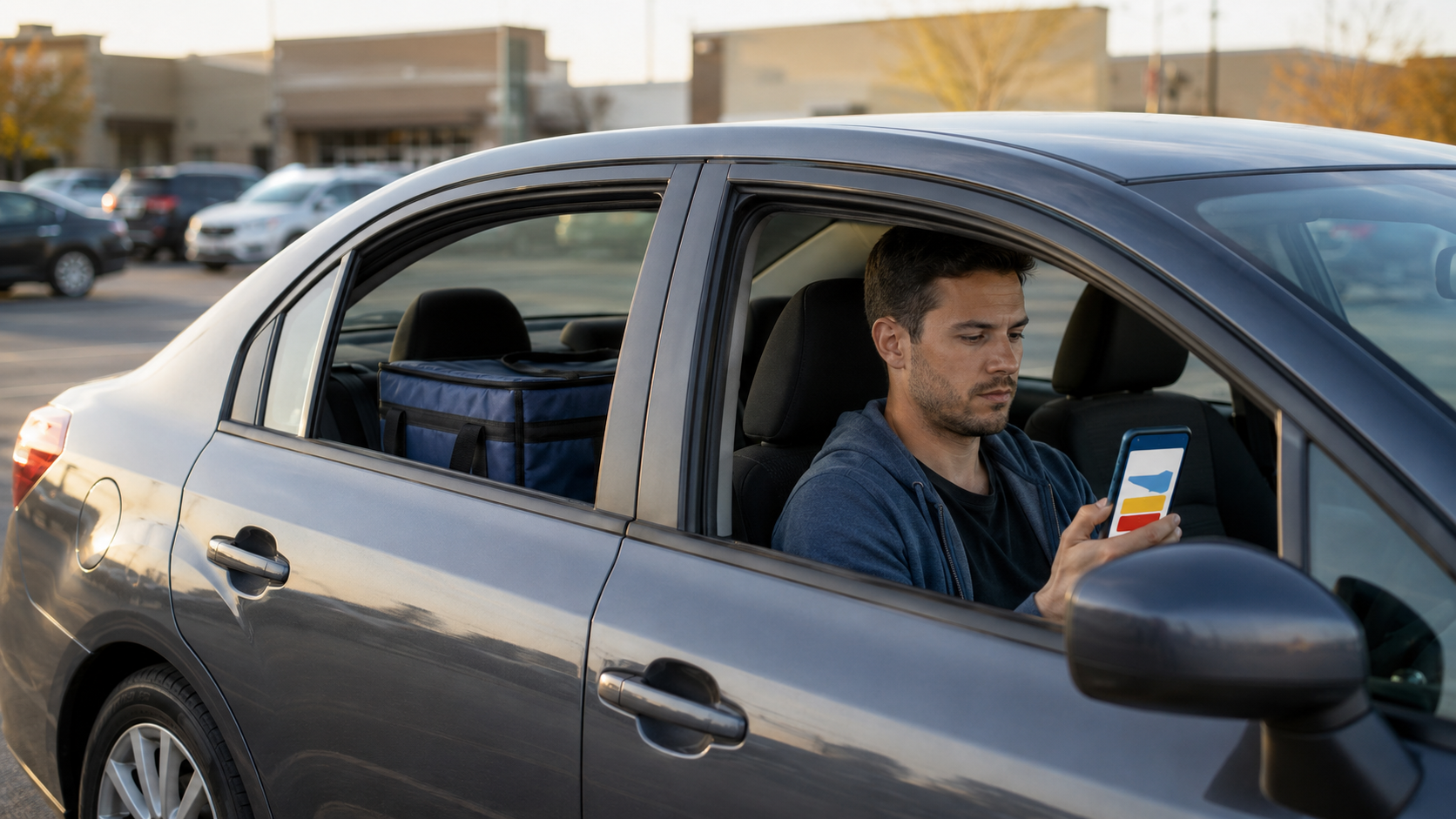
Is That Delivery Offer Really Profitable?
When a delivery offer appears on your phone, the payout is usually the first thing you notice. That makes sense. You may only have a short time to decide whether to take it or let it go.
The problem is that the payout does not tell you how much you will actually make. An offer can look good on the screen and still leave very little profit once you count the mileage, fuel, time, return trip, and wear on your vehicle.
I have been doing gig delivery work for four years, and I have learned that the number on the screen only tells part of the story. What matters is what you keep after completing the entire trip.
Payout and profit are not the same thing
If an offer pays $18, you are not automatically making an $18 profit.
You still have to drive to the customer, use fuel, put miles on your vehicle, and spend time completing the delivery. You may also have to drive back toward the store before you are in a good position to receive another offer.
That is why two offers with the same payout can have very different results.
An $18 delivery that takes 30 minutes and leaves you near another pickup location may be a decent offer. Another $18 delivery could take an hour, place 20 miles on your vehicle, and leave you well outside your normal delivery area.
The payout is the same. The amount you keep is not.
Look at the whole trip
One of the biggest things drivers overlook is the drive back.
An offer might show 10 miles, but what happens after you reach the customer? If the delivery leaves you 8 miles away from the store, those return miles should be part of your decision.
In that situation, the 10-mile delivery could really require 18 miles of driving.
A $20 offer for 10 miles looks like it pays $2 per mile. If you must drive 8 empty miles back, the same offer pays about $1.11 per actual mile before your expenses are removed.
Of course, you may receive another offer near the customer. Some areas also have several stores close together. Every delivery area works differently.
The point is to look at where the offer takes you. Do not automatically assume the mileage shown on the screen represents the complete trip.
Fuel is only one expense
Most drivers think about gas because it is the expense we see most often. We pull up to the pump and watch the total climb.
But gas is not the only cost of using your vehicle for deliveries.
Every delivery adds wear to your tires, brakes, suspension, and other parts. It brings your next oil change closer. It also adds mileage that can lower the value of your vehicle.
You may not pay for those expenses today, but they are still building while you drive.
Your delivery expenses may include:
- Fuel
- Oil changes
- Tires
- Brakes
- Repairs and maintenance
- Vehicle depreciation
- Insurance
- Phone service
- Cleaning and delivery supplies
You do not need to figure out exactly how much one delivery takes off the life of your tires or brakes. A reasonable vehicle cost per mile gives you a way to include those expenses when estimating your TRUE profit.
Ignoring vehicle wear does not make it free. It only pushes the cost into the future.
Do not forget about your time
Some offers look good based on mileage but fall apart when you consider the time involved.
A short delivery might include a long wait at the store. A shopping order may take longer than expected because items are difficult to find. An apartment delivery could include stairs, a long walk, or trouble finding the correct building.
Imagine accepting an $18 offer because you expect it to take 30 minutes. At that pace, it equals $36 per hour before expenses.
Now imagine waiting an additional 20 minutes because the order is not ready. The delivery takes 50 minutes instead of 30. That $18 payout is now equal to $21.60 per hour before expenses.
If the delivery reaches a full hour, it drops to $18 per hour before expenses.
Nothing changed about the payout. The offer became less valuable because it took more of your time.
When estimating delivery time, think beyond the drive to the customer. Count the time spent waiting, shopping, loading, driving, unloading, and getting back into position for another worthwhile offer.
Check profit per mile and profit per hour
I believe drivers should look at both profit per mile and profit per hour.
Profit per mile helps you understand what the delivery is doing to your vehicle. Profit per hour helps you understand what it is doing with your time.
Sometimes an offer looks good using one measurement but not the other.
A shopping order might require very few miles, giving it a strong rate per mile. But if it takes an hour and a half to shop and deliver, the hourly profit may be too low.
A longer delivery might be mostly easy highway driving and produce a reasonable hourly amount. But the number of miles placed on your vehicle may make it a poor choice.
Neither measurement tells the whole story by itself. Looking at them together gives you a better picture of the offer’s real value.
Think carefully about estimated tips
Tips can make a major difference in delivery driver earnings, but an estimated tip is not always guaranteed.
Depending on the delivery platform, a customer may be able to change the tip after the delivery. That does not mean every customer will remove it. Most drivers will complete plenty of deliveries without that happening.
Still, it is worth considering how much of the offer depends on the tip.
Would the delivery still cover your costs if the tip were reduced? How much would your profit change? Is most of the payout coming from the tip instead of the platform?
A good tip can improve an offer. It cannot remove the mileage, time, or vehicle costs required to complete it.
Your vehicle and delivery area matter
There is no single rule that works for every gig driver.
Someone driving a fuel-efficient hybrid will have different operating costs than someone using a truck or SUV. A driver in a city may have several pickup locations nearby. A small-town driver may have only one main store and may need to return after most deliveries.
I understand the small-town side of this. When another store is not close by, the return trip can make a big difference. You cannot judge the offer as though another order will automatically be waiting near the customer.
Your standards should be based on your vehicle, your delivery area, your expenses, and what you need to earn.
Once you know your minimum acceptable profit per mile and profit per hour, decisions become easier. Instead of accepting an offer because the payout looks attractive, you can compare it with standards that make sense for you.
A quick way to evaluate a delivery offer
Before accepting an offer, try to answer these questions:
- What is the total payout?
- How many miles will I actually drive?
- Will I need to count return miles?
- How long will the entire delivery probably take?
- What will the fuel cost?
- What should I allow for vehicle wear?
- Where will the delivery leave me?
- What is the estimated profit per mile?
- What is the estimated profit per hour?
You may not have time to calculate every number perfectly. Gig drivers often have less than a minute to make a decision.
The goal is not perfection. The goal is to stop judging offers by payout alone.
Know what you are really making
TRUE Driver Profit was created to help gig delivery drivers evaluate the entire trip. It brings the payout, mileage, estimated time, fuel, vehicle costs, and return miles together so drivers can see an offer more clearly.
It does not make the accept-or-skip decision for you. Every driver has different costs, goals, and working conditions. It gives you information that can help you make your own decision.
A delivery offer can have a good payout and still produce poor profit. Another offer with a smaller payout may be worthwhile because it requires less time, fewer miles, and lower expenses.
The payout tells you how much the offer pays. Your TRUE cost tells you what it takes to complete it. Your TRUE profit tells you what may actually be left when the trip is over.