Should Delivery Drivers Count Return Miles?
Return miles can turn a good-looking delivery offer into a poor decision. Learn how dead miles affect fuel costs, vehicle wear, profit per mile, and the real value of a trip.
By Thomas Staggs · August 30, 2026
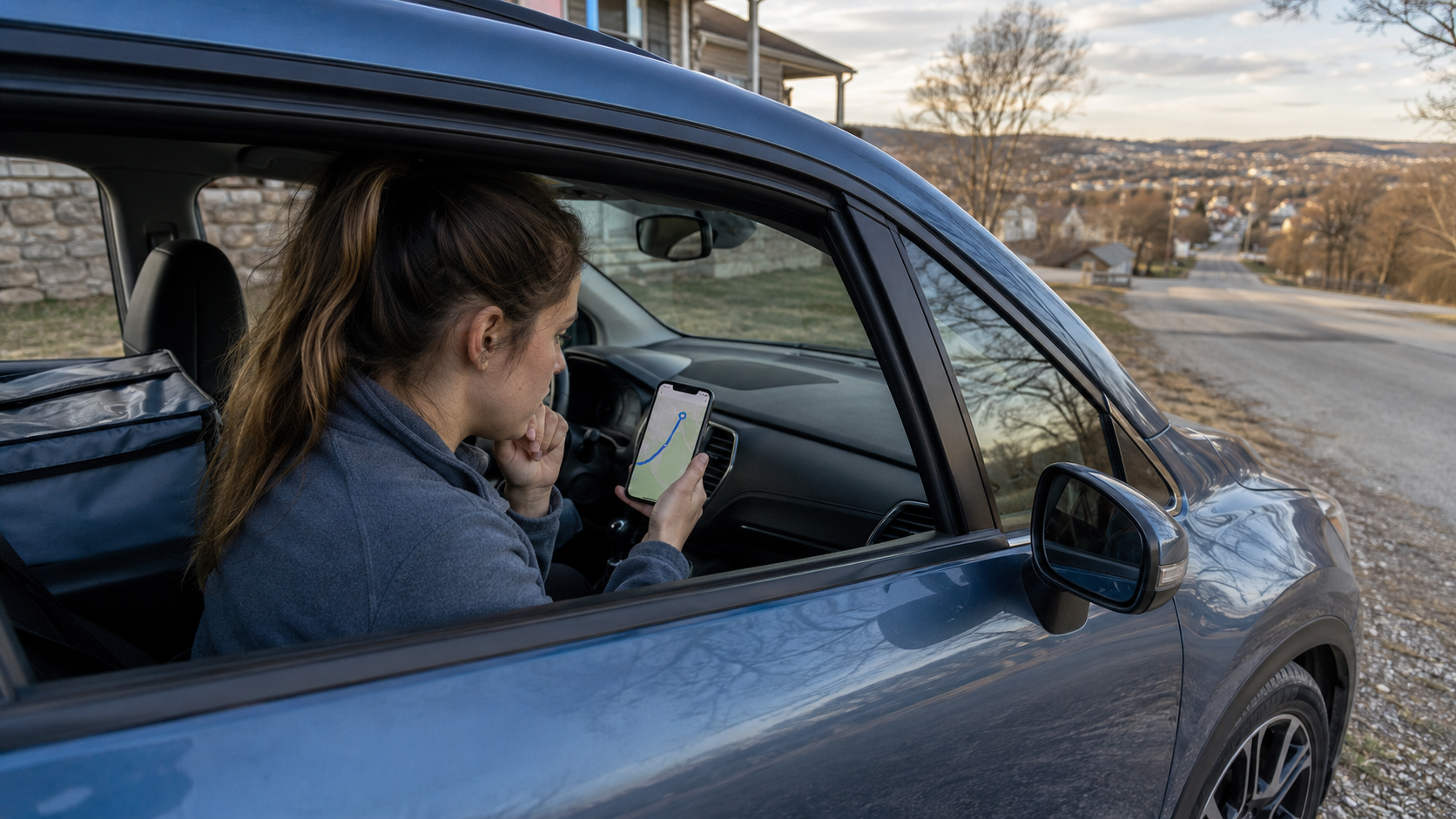
A delivery offer might show good pay for the miles listed on the screen. But what happens after you reach the customer?
If the delivery leaves you several miles away from the store or the area where you normally receive offers, you may have to drive back without getting paid. Those return miles still use fuel, take time, and add wear to your vehicle.
That is why delivery drivers should consider return miles before accepting an offer. They may not always need to be counted in full, but they should never be ignored.
What are return miles?
Return miles are the miles you drive after completing a delivery to get back to a store, pickup location, or area where you can reasonably expect another offer.
Drivers also call them dead miles or unpaid miles because there is no active delivery paying for that part of the trip.
Suppose an offer shows 12 miles. The customer lives 9 miles away from the store, and there are no other pickup locations nearby. If you have to drive those 9 miles back, the entire trip may require about 21 miles.
The offer screen showed 12 miles, but your vehicle traveled 21.
That difference can completely change whether the delivery was worth taking.
Should delivery drivers always count the full return trip?
Not necessarily.
Every delivery area is different. Some drivers work around several stores and restaurants. A delivery might leave them close to another pickup location where they can receive their next offer.
Other drivers work from one main store, especially in smaller towns. When a delivery takes them outside that area, they may have little choice but to drive back before receiving another worthwhile offer.
I understand the small-town side of this. Another store is not always waiting a few minutes away. Sometimes the road back is simply part of completing the trip, even if the delivery platform does not include it in the mileage shown.
The right question is not always, “How far is it back to the same store?”
A better question is, “Where will I be able to receive my next realistic offer?”
If the answer is near the customer, you may not need to count a full return trip. If the answer is back where you started, those return miles belong in your estimate.
How return miles affect profit per mile
Profit per mile is based on the total number of miles your vehicle must travel, not only the mileage displayed on the offer.
Imagine an offer paying $22 for 12 displayed miles.
Based only on the displayed mileage, it appears to pay about $1.83 per mile before expenses.
Now include a 9-mile drive back to your normal pickup area. The full trip becomes approximately 21 miles.
The same $22 payout now equals about $1.05 per actual mile before expenses.
The payout never changed. Your understanding of the trip did.
This is why an offer can look strong on the screen and produce disappointing delivery driver profit after it is completed.
Return miles increase more than your fuel cost
Drivers often think about the extra gas required for a return trip. Fuel matters, but it is only one part of the cost.
Every additional mile also brings your next oil change closer. It adds wear to your tires, brakes, suspension, and other vehicle parts. It also adds mileage that can reduce the vehicle’s value.
If your estimated fuel and vehicle cost is 35 cents per mile, 21 miles would cost approximately $7.35.
Subtracting that estimated vehicle cost from a $22 payout leaves about $14.65 before taxes and before placing a value on your time.
If you counted only the 12 displayed miles, you would estimate the vehicle cost at $4.20. That would make the delivery appear $3.15 more profitable than it may actually be.
Thirty-five cents per mile is only an example. Your actual cost depends on your vehicle, fuel economy, gas price, maintenance needs, insurance, and other expenses.
The important part is using the full realistic mileage with your own vehicle costs.
Return miles also cost time
A return trip does more than add miles. It keeps you from being ready for another offer.
Suppose the delivery itself takes 35 minutes, but driving back to your normal area takes another 15 minutes. The trip has now used 50 minutes of your working time.
If the offer pays $22, it may first appear to produce a strong hourly rate. Once the return drive and vehicle expenses are included, the result may look very different.
Time spent driving back is still work-related time, even though the platform is not paying separately for it.
That does not automatically make the delivery bad. It means the return time should be included when you estimate profit per hour.
When you may not need to count every return mile
There are situations where counting a full return trip would not give you a fair picture.
You may not need to count all the return miles when:
- Another busy store or restaurant is close to the customer.
- You regularly receive worthwhile offers in the delivery area.
- The delivery moves you toward an area where you planned to work.
- The customer is close to your home and this is your final delivery.
- You receive another order before beginning the return trip.
Even in these situations, avoid assuming another offer will appear simply because it is possible.
What usually happens in your delivery area matters more than what could happen once in a while. Your past trips can help you judge whether receiving another offer near the customer is realistic.
When return miles matter the most
Return miles deserve extra attention when the delivery:
- Goes into a rural area.
- Ends far outside your normal delivery zone.
- Leaves you away from stores and restaurants.
- Travels down a road you must use again to return.
- Takes you into an area where you rarely receive offers.
- Happens near the end of a slow delivery period.
- Includes a long drive for a payout that is only slightly above your minimum.
A high payout can make a long return trip worthwhile. A smaller payout may not leave enough profit after the full mileage and time are considered.
The goal is not to reject every long-distance delivery. It is to understand the whole trip before deciding.
How to estimate return mileage before accepting
Drivers often have less than a minute to evaluate an offer, so the process needs to stay simple.
Start by looking at the customer’s general location. Think about the nearby stores, restaurants, and roads you already know.
Then ask yourself three questions:
- Where will this delivery leave me?
- Can I realistically receive another good offer there?
- If not, how far must I drive to get back into position?
Add that expected return distance to the mileage shown on the offer. It does not have to be exact down to every tenth of a mile. A reasonable estimate is better than treating the return drive as free.
With experience, you will begin recognizing which locations usually require a full drive back and which ones leave you near another opportunity.
A simple return-mile example
Consider this delivery offer:
- Payout: $24
- Displayed mileage: 11 miles
- Estimated delivery time: 35 minutes
- Distance back to your normal pickup area: 8 miles
- Estimated return time: 15 minutes
If you judge the offer by the displayed mileage, it appears to pay about $2.18 per mile.
After adding the return trip, the total becomes 19 miles. The payout falls to about $1.26 per actual mile before expenses.
The total working time also changes from approximately 35 minutes to 50 minutes.
This does not tell you automatically whether to accept or skip the offer. Your vehicle costs and personal profit goals still matter. But now you are evaluating the whole trip instead of only the part shown on the offer screen.
Track what happens after the delivery
One of the best ways to improve your delivery decisions is to compare your estimate with what actually happened.
After completing a longer delivery, notice:
- How many total miles you drove
- How long it took to receive another offer
- Whether another pickup location was nearby
- Whether you drove back empty
- How the final profit compared with your original estimate
Over time, this helps you learn which delivery locations are usually profitable and which ones regularly create too many unpaid miles.
Your own trip history is often more useful than a general rule because it reflects your vehicle and the area where you actually work.
Count the whole trip, not just the offer screen
Return miles are easy to overlook because they may not appear in the offer details. Your vehicle still travels those miles, and you still spend the time required to drive them.
After four years of gig delivery work, I have learned that where a trip ends can matter almost as much as where it begins. A delivery that leaves you near another good pickup area may be worthwhile. An identical offer that leaves you far from everything may produce a completely different result.
TRUE Driver Profit helps drivers evaluate payout, mileage, time, vehicle costs, and expected return miles together. It gives you a clearer estimate of your TRUE cost and TRUE profit while leaving the final accept-or-skip decision where it belongs, with you.
Before accepting your next delivery offer, do not look only at how far it takes you. Look at where it leaves you and what it will take to continue working.