What Is a Good Profit Per Mile for Delivery Drivers?
Profit per mile shows what remains after delivery expenses are removed. Learn how to calculate it and set a realistic goal for your vehicle and delivery area.
By Thomas Staggs · August 30, 2026
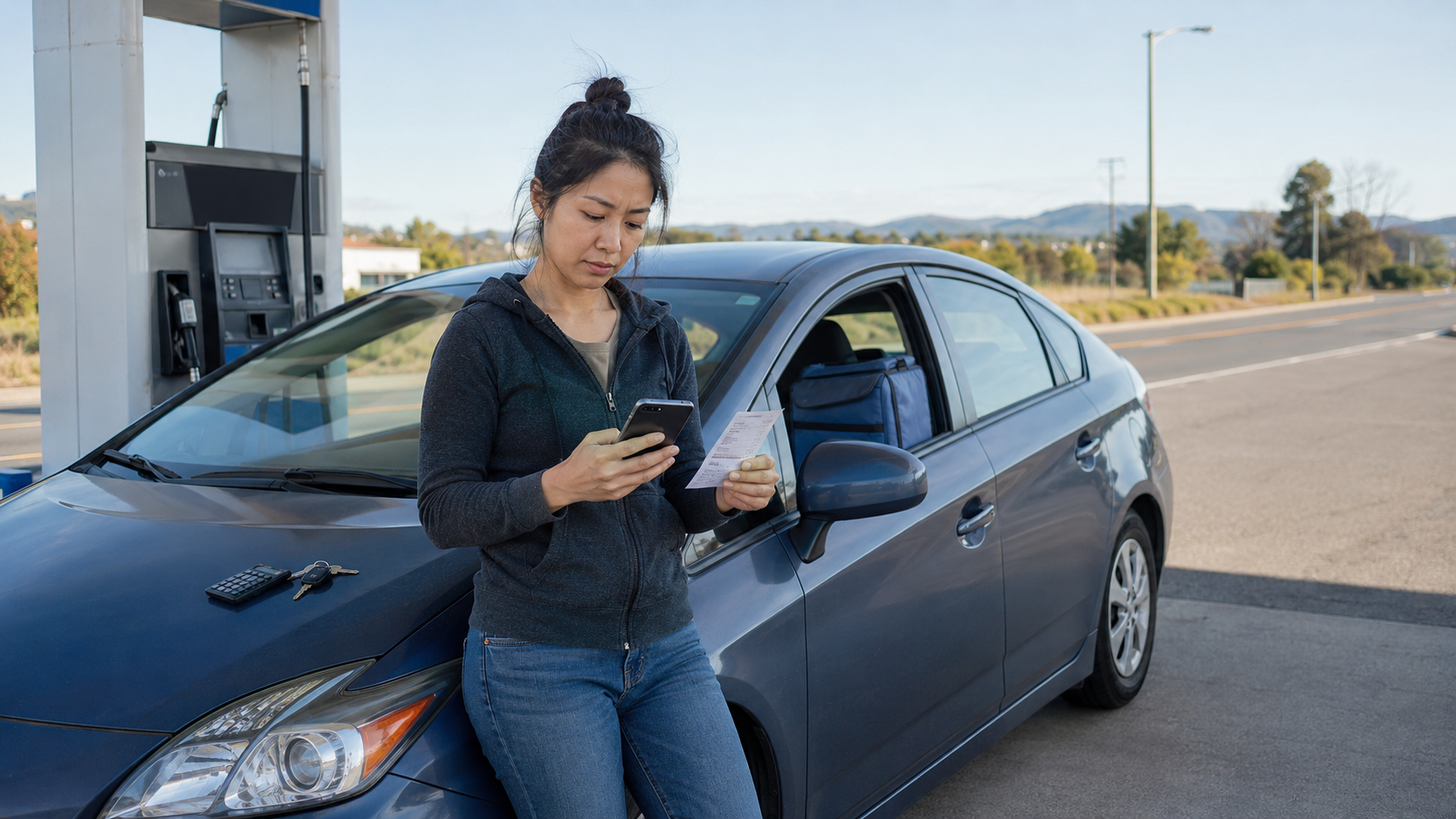
Drivers often judge an offer by dividing the payout by the mileage shown on the screen.
A $20 offer for 10 miles appears to pay $2 per mile. That is useful information, but it is not profit per mile. It is payout per displayed mile before fuel, vehicle wear, return miles, and other delivery expenses are considered.
Profit per mile tells you more. It estimates how much money remains from each mile after the cost of completing the delivery is removed.
What is profit per mile?
Profit per mile is your estimated delivery profit divided by the total number of miles required to complete the trip.
The basic calculation is:
Profit per mile = payout minus delivery expenses, divided by total trip miles
The total mileage should include every mile connected to completing the delivery. Depending on the trip, that may include driving to the pickup, driving to the customer, and returning to an area where you can reasonably receive another offer.
If you leave out expenses or unpaid miles, the result may look better than the delivery actually was.
Payout per mile and profit per mile are different
Payout per mile measures the offer before expenses.
Profit per mile measures what may remain after expenses.
Suppose an offer pays $24 and requires 12 total miles.
The payout per mile is $2.
Now suppose your estimated fuel and vehicle cost is 40 cents per mile. Driving 12 miles would cost approximately $4.80.
Subtracting $4.80 from the $24 payout leaves an estimated profit of $19.20.
Divide $19.20 by 12 miles, and the estimated profit is $1.60 per mile.
Both numbers are useful:
- Payout per mile: $2
- Estimated profit per mile: $1.60
The second number gives you a clearer picture of what the delivery may be worth to you.
What expenses should be included?
Fuel is only one part of your cost per mile.
Your estimate should also recognize the wear delivery driving puts on your vehicle. This may include maintenance, tires, brakes, repairs, and depreciation.
Depending on how you track your work, you may also include part of your insurance, phone service, delivery supplies, tolls, or parking costs.
The exact amount will be different for every driver. A fuel-efficient hybrid will not have the same operating cost as a truck or SUV. An older vehicle may have little remaining depreciation but require more repairs. A newer vehicle may need fewer repairs while losing more value as mileage increases.
If you are unsure which costs matter, start with this guide to gig delivery driver expenses.
The goal is not to predict every future repair perfectly. The goal is to stop treating your vehicle as though it costs nothing beyond gas.
How do you calculate profit per mile?
Use these four steps:
- Estimate the total payout.
- Estimate the full trip mileage.
- Subtract your fuel, vehicle, and trip-specific expenses.
- Divide the remaining profit by the total mileage.
Consider this example:
- Delivery payout: $26
- Displayed mileage: 11 miles
- Expected return mileage: 7 miles
- Total expected mileage: 18 miles
- Estimated vehicle cost: 35 cents per mile
- Toll: $2
The vehicle cost for 18 miles would be approximately $6.30.
Add the $2 toll, and the total estimated trip expense becomes $8.30.
Subtract $8.30 from the $26 payout. The estimated profit is $17.70.
Divide $17.70 by 18 miles. The estimated profit is about 98 cents per mile.
The offer initially appeared to pay $2.36 per displayed mile. After including return mileage and expenses, the estimated profit fell below $1 per actual mile.
That is a major difference.
What is a good profit per mile?
There is no single profit-per-mile number that works for every delivery driver.
A good profit per mile should cover your vehicle costs and leave enough money to meet your personal income goal. Your number will depend on:
- Your vehicle
- Fuel economy
- Gas prices
- Maintenance costs
- Delivery area
- Typical return mileage
- Average wait time
- Personal income goal
- How many working miles you normally drive per hour
Instead of copying another driver’s rule, use your own numbers.
If your vehicle costs 35 cents per mile to operate, a profit of 40 cents per mile would leave very little above that cost. If your vehicle costs 60 cents per mile, the same offer could be even worse.
The number should also be considered with profit per hour. A strong profit-per-mile result can still produce poor hourly earnings if the order takes too long.
Use your hourly goal to help set a mileage goal
Your desired profit per hour can help you estimate the profit per mile you need.
Suppose your goal is to earn $20 in profit for each working hour. You review your completed trips and find that you normally drive about 15 total working miles per hour.
Dividing $20 by 15 miles gives you a starting goal of about $1.33 in profit per mile.
This is only a starting point. Some hours will include more waiting and fewer miles. Others will include long drives with little waiting.
Your records will help you adjust the goal over time.
A number based on your real trips is more useful than a rule copied from a driver using a different vehicle in a different area.
Count the return trip
A delivery may look excellent per mile when you use only the mileage shown on the offer.
The result can change quickly when the trip leaves you far from another pickup opportunity.
Imagine an offer paying $22 for 10 displayed miles. It appears to pay $2.20 per mile.
If the customer is 8 miles from your normal pickup area and no other stores are nearby, the full trip may require 18 miles.
The payout per actual mile falls to about $1.22 before expenses.
Whether you need to count the full drive back depends on where the delivery ends and whether another realistic pickup opportunity is nearby. This article explains when delivery drivers should count return miles.
Do not assume you will receive another offer near the customer simply because it could happen. Base your estimate on what usually happens in your area.
Do not ignore time
Profit per mile protects your vehicle. Profit per hour protects your time.
You need both.
A low-mileage shopping order might produce a strong profit per mile. If shopping, waiting, loading, and delivering take 90 minutes, the profit per hour may still be too low.
A longer highway delivery might show a lower profit per mile while producing a reasonable hourly result. It may also place too much mileage on your vehicle.
Neither measurement should make the entire decision alone.
Pickup delays are especially important because the mileage stays the same while the hourly value falls. If waiting is a common problem in your area, read how long delivery drivers should wait for an order.
Be careful with estimated tips
An estimated tip can make the profit per mile look stronger.
Depending on the platform, the customer may be able to change the tip after the delivery. That does not mean you should assume every tip will disappear.
It means you should understand how much of the expected profit depends on the tip.
Ask yourself:
- Is the delivery still worthwhile if the tip is reduced?
- How much of the payout comes from base pay?
- Would losing part of the tip place the profit below my minimum?
A good tip can improve an offer. It does not remove the mileage or expenses required to complete it.
Estimate before the delivery and check afterward
Before accepting an offer, you only have an estimate.
You estimate the mileage, time, return trip, and vehicle cost based on the information available. The final result may be different.
After completing the delivery, compare your estimate with what actually happened:
- Total payout
- Final tip
- Actual mileage
- Actual time
- Return mileage
- Trip expenses
- Profit per mile
- Profit per hour
This comparison helps improve future decisions.
You may discover that certain areas require more return miles than expected. Some pickup locations may regularly cause delays. Some offer types may look good per mile but produce weak hourly profit.
The more real trips you review, the more useful your personal standards become.
A quick profit-per-mile check
When an offer appears, ask:
- What is the total payout?
- How many miles are shown?
- Will I need to drive back?
- What is my estimated vehicle cost per mile?
- Are there tolls or parking fees?
- How much profit may remain?
- What is the estimated profit per actual mile?
- How long will the entire trip take?
You may have less than a minute to decide. The estimate does not need to be perfect. It needs to be more complete than judging the offer by payout alone.
Build a standard that fits your work
After four years of gig delivery work, I have learned not to trust one number by itself.
A large payout can hide too many miles. Strong pay per mile can hide a long wait. A good hourly estimate can hide heavy vehicle use.
Profit per mile is most useful when it is based on your vehicle costs, your delivery area, and the full trip.
TRUE Driver Profit helps drivers compare payout, mileage, time, fuel, vehicle costs, and return miles before making their own decision. It shows estimated profit per mile and profit per hour so drivers can judge whether a delivery offer is really profitable.
A good profit-per-mile goal is not the number another driver tells you to use. It is the number that covers your TRUE cost and leaves enough TRUE profit for the work to be worth doing.